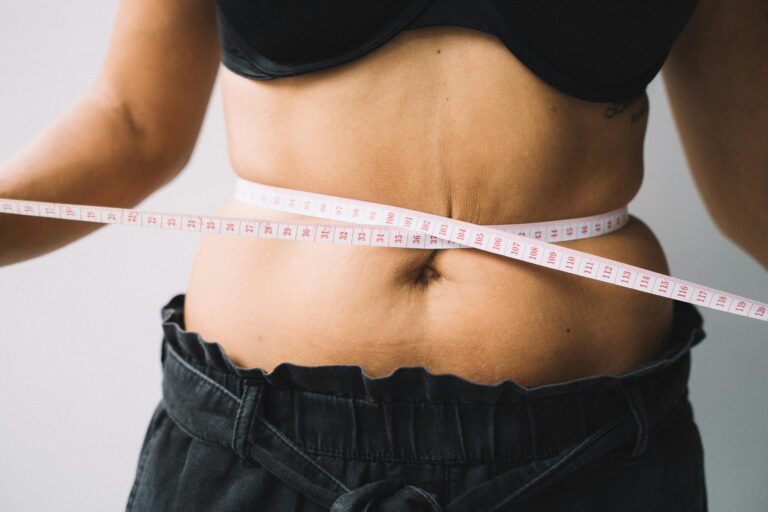
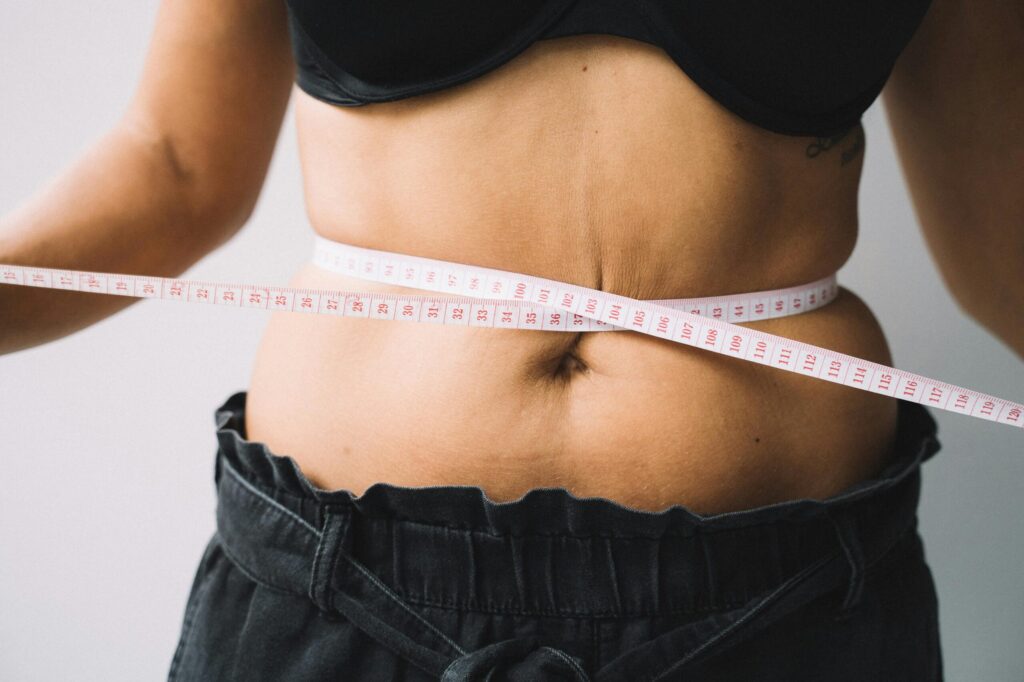
DR: an acronym I was introduced to while pregnant, and one I became very familiar with in the weeks after I delivered twins.
I hope DR means something wonderful to you, like Drinks and Recreation maybe? For me, DR stood for Diastasis Recti – a condition where the growth of your baby-bump during pregnancy causes the muscles in your abdomen to separate.
For me, DR stood for Diastasis Recti – a condition where the growth of your baby-bump during pregnancy causes the muscles in your abdomen to separate.
“Is that possible?”, you ask. Sadly, it is.
In fact, that ‘mommy pooch’ that many of our own moms had wasn’t just fat. It was Diastasis Recti. Thankfully, DR is much better understood and identified today.
What is Diastasis Recti?
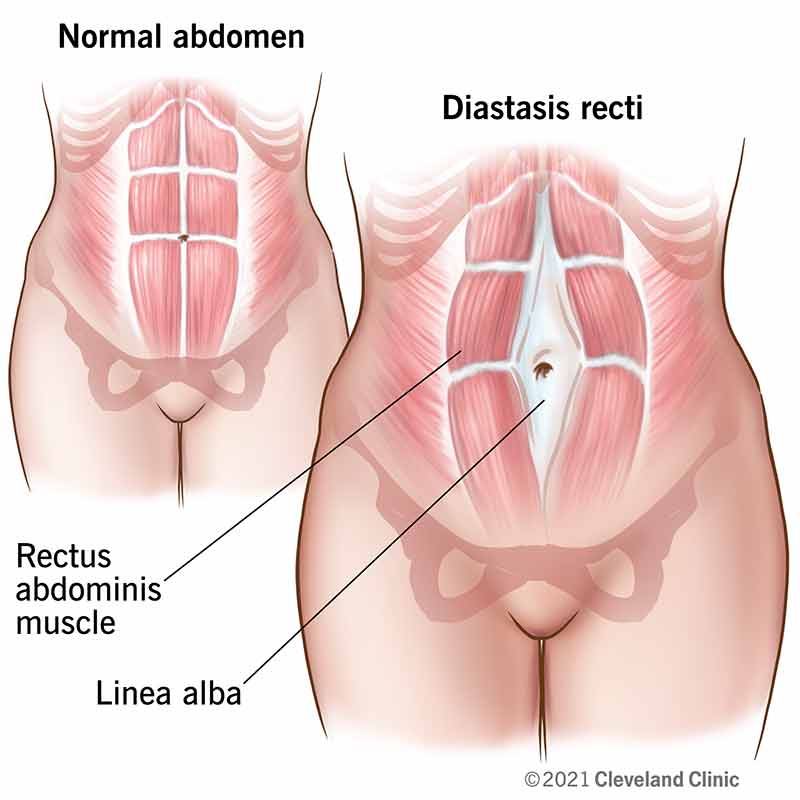
We all have rectus abdominus muscles – the muscles that make up a six-pack. DR happens when these muscles separate during pregnancy.
The abdomen is comprised of left and right ab muscles connected by a thin band of connective tissue called linea alba. Pregnancy puts a lot of pressure on the abdomen. While pregnant, the left and right ab muscles are pushed outward and stretched to make room for a growing baby. Diastasis recti occurs when the linea alba is overstretched and doesn’t come back together, causing the left and right sides of the abdominals to stay separated.The result? A larger-than-usual belly, possibly for life.
The result? A larger-than-usual belly, possibly for life.
Diastasis Recti as I experienced it & my recovery efforts
Most pregnant women will experience some degree of DR post-delivery, but how much DR, and the extent to which you are able to ‘close the gap’ varies. The bigger your belly grows, the more likely you are to experience lasting DR. As a mom carrying twins, the odds were stacked against me.
I identified that I had DR about 8 weeks post-delivery, when my OB noticed that the shape of my belly and appearance of my belly button was still somewhat de-formed. I also continued to look pregnant, but that was to be expected. I was told that physiotherapy, a clean diet, and time would help with everything, but my OB made me no promises of a full recovery.
I heard the “9-months in 9-months out” adage countless times, and friends gave me hope that my body would eventually go back to normal. So, I did the only sensible thing to do – I embarked on a DR-recovery journey.This involved one year of physiotherapy, mostly clean eating, and a return to a normal exercise regimen.
This involved one year of physiotherapy, mostly clean eating, and a return to a normal exercise regimen.
But when I still looked pregnant one-year postpartum, I started wondering ‘why me?’.
I had seen so many friends bounce back to their pre-baby bodies within about 6 months. Even the one friend who had had twins managed to mostly resurrect her pre-partum belly within a year. Why weren’t my efforts getting me there?
Why some women ‘snap-back’, and some don’t
Around the time I hit 18 months post-partum, I came across some articles that described the genetic factors involved in Diastasis Recti recovery. They discussed how the elasticity of one’s connective tissues varies from individual to individual. In the same way that some of us have great hair while others have scantier tresses, not everyone’s connective tissues are born equal.
Looking back at the genes I came from, I noticed that my mom and her two child-bearing sisters all retained a larger-than-usual belly shape. So, I concluded that I fell into the category of women not-so-blessed in the connective tissue department.
This, together with the fact that my belly had expanded more than usual to accommodate twins, was the reason I was not able to shrink the DR much more.
What next? Options
Eventually, I came to a less-than-zen-like state of acceptance about my condition.
When you talk about how your belly looks on good vs bad days and wearing shapewear.
In addition to having DR, there are other factors that regularly impact the appearance of my belly, like bloating and hormonal fluctuations. So, there is often a range of just how pregnant I might look. On a good day, I maybe look mildly bloated. On a bad day, though, most of those who don’t know me assume I am expecting!
If this is your eventuality, too, and your state of acceptance is far from zen-like, there are a few options to consider:
1 Shapewear:
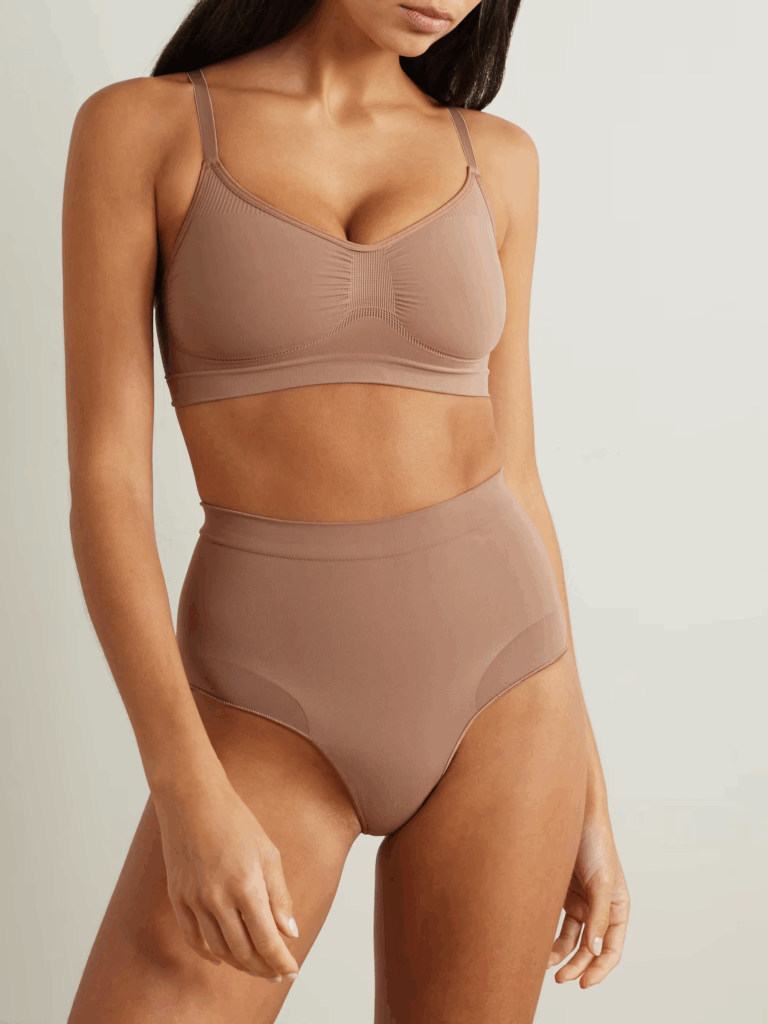
The least invasive option.
It’s one I use on special occasions when there is enough motivation to bear with reduced comfort, or when I know I will be in an all-air-conditioned space. Singapore is hot and humid, so adding shapeware into the mix only exacerbates the heat.
My favorites are these Spanx and these Skims. They get the job done.
For an easier daily-wear hack, these high-rise Lululemon Align 4” shorts are fab!
These snug shorts hug my belly in while also keeping me comfortable and dry. They’re great under breezy dresses on self-conscious days.
My tip: Buy one size smaller than your usual. It’ll give you better tummy control!
You’re welcome!

2 Belly laser:
Numerous aestheticians and beauty salons offer forms of lasers that target the belly region. These lasers aim at improving the appearance of stretch marks and tightening the tummy-area generally.
I have not tried any of these myself, but a friend mentioned that it significantly improved the appearance of loose skin around her belly and gave her the confidence to go out in a bikini once more.
3 Functional Magnetic Stimulation (FMS) technology:
This fairly new technology delivers magnetic energy to the peripheral nerve of the abdomen to contract muscles.
I have yet to hear of anyone who has tried this, but there is evidence in scholarly articles to support its efficacy in increasing muscle mass, decreasing fat thickness, and narrowing DR. It is also meant to improve body contour and posture.
It is available in Singapore through specific clinics and seems worth looking into!
4 Surgery:
What’s needed to permanently fix DR is a not just a tummy-tuck. More essential than a tummy-tuck is a DR Repair surgery known formally as ‘Rectus diastasis gap repair’.
In fact, in cases where DR has also resulted in hernias and chronic lower-back pain, some women have had no choice but to engage surgical intervention to regain functionality.
Even if your goal is solely cosmetic, surgery is an option.
Having a full “mommy-belly repair”, where the goal is to resurrect the appearance of a pre-baby belly, in fact entails having two to three procedures at a go: a DR repair, a tummy-tuck, and possibly, liposuction.
The DR repair involves inserting a mesh to hold together the two sides of your abdominal muscles and close the gap. The tummy-tuck helps to rid the area of loose skin and excess fat, while further strengthening the abdominal wall. Together, this combination of procedures comes closest to restoring your abdomen.
Depending on the country you live in and the norms of the surgeons available, you may have to do these as separate procedures instead of all at once. There are now a number of surgeons known for conducting “mommy-makeovers”, a term that refers to the various aesthetic procedures aimed at improving the appearance of the belly and breast regions after childbirth and breast-feeding. One such surgeon who comes up in the well-known Netflix series, Dubai Bling, is Dr Bouraoui Kotti. His Instagram account depicts the results he has achieved for some of his mom-clients, effectively restoring their midsections.
The limited research I have done in Singapore tells me that how many separate procedures one would need to completely ‘makeover’ one’s belly would be decided by the surgeon on a case-by-case basis. It would consider various aspects of the client’s post-baby physiology, including the width of the DR gap, the presence of any hernias, and the surgeon’s own range of expertise.
To cut or not to cut?
If you’re like me, the thought of (once again) being able to wear most anything is quite tempting, so I briefly considered the surgical route. In the end, though, I decided against it.
Why? Well, I don’t have a functional issue, so for me the consideration was largely aesthetic. I don’t work as a model or an actress, and don’t have a professional need to look a certain way.
Most importantly, though, I hate the thought of going under the knife unless strictly necessary.
Add to that the intensive after-care involved, all of which would need to be managed while also handling my growing twin toddlers – the thought of that induced more stress than calm!
A DR repair surgery is invasive, and I was told that the aftercare would entail avoiding carrying heavy items (i.e. saying no when your child wants to be carried) and a 6-month exercise ban. I can barely imagine a week without some form of yoga or Pilates, let alone 6 months! On balance, I decided that the cons outweighed the pros for me.
Could I have done more research and enquired with more surgeons? Probably. But I knew I was leaning against surgery quite heavily already. Having said that,this really is a very personal decision,
this really is a very personal decision
and I don’t think there is any shame in choosing to have a DR repair, or a mommy-makeover for purely cosmetic reasons.
Becoming a mom comes with so many changes, and those changes can weigh on a human being. If there is one change that can be safely undone, and can significantly improve your self-esteem, it’s worth exploring.
Every person’s risk-appetite when it comes to medical procedures varies. At the end of the day, it’s like most other decisions – a weighing of the costs and benefits as they apply to you individually.